Koreans in Jerusalem

  • June 26, 2010 3:46 pm

When we went to Shymkent , Kazakhstan a few years ago, the Korean church was active in that Muslim nation. We took Lily (our exchange student daughter) and her sister Regina there, and we were impressed with the fervency of their prayers. In Poprad, Slovakia the ministry of Pastor Gabrielle Minarik was heavily supported by a Korean pastor working in the Czech Republic. (Pastor Minarik is the man who prayed for Art, and the knee injury that had caused pain for thirty years was instantly healed  watch). Seems like they’re everywhere. These people really take the Great Commission seriously.

They’re here in Jerusalem too. As we entered Succat Hallel one afternoon this week, we heard loud, intense praying that sounded quick with a quality of urgency. We had arrived at the end of the Korean watch. A group of Korean Christians has started a house of prayer on the north side of the old city, which means that there are now houses of prayer on all four sides, as was prophecied a few years ago. The Koreans man one of the watches at Succat Hallel.

We sat down to begin praying and noticed that there were about a dozen Koreans. A man, who seemed to be the pastor, was praying gently from the microphone. At intervals, they all said “amen.” Near the end of the watch, they gathered at the front to pray for a young man, his wife, and their child sleeping in a stroller. The pastor prayed for a fairly long time. Then, there must have been some kind of signal because they burst, all at once, into an explosion of prayer. The sound of their voices was bold and stacatto with a definite unified rising and falling rhythm. Then, without any noticeable signal, they all stopped—instantaneously, simultaneously—and the pastor continued on in his sweet voice. It was remarkable.

These people know how to “keep rank.” It was a blessing to be in the same room with them and to join in their prayer. This quality is part of the explanation of how South Korea has undergone so radical a transformation from a desolate, impoverished nation to a modern and prosperous nation–such a radical contrast to their northern neighbor. They remind me of the mighty men described in the Chronicles whose hearts have a special quality, which we would do well to develop:

All these men of war, that could keep rank, came with a perfect heart to Hebron, to make David king over all Israel: and all the rest also of Israel were of one heart to make David king. (1 Chronicles 12:38, King James Bible)

Of Zebulun, such as went forth to battle, expert in war, with all instruments of war, fifty thousand, which could keep rank: they were not of double heart. (1 Chronicles 12:33)

These mighty ones who could keep rank did so because of their hearts. Other translations describe their hearts in these ways:

  • Undivided loyalty
  • Singleness of purpose
  • Undivided heart
  • Unquestioned loyalty
  • True-hearted

John Wesley’s notes say that they were able to set aside their own interests for the good of others. Lord, bless the Korean Christians and help us become more like them.

Zion

  • June 26, 2010 2:57 pm

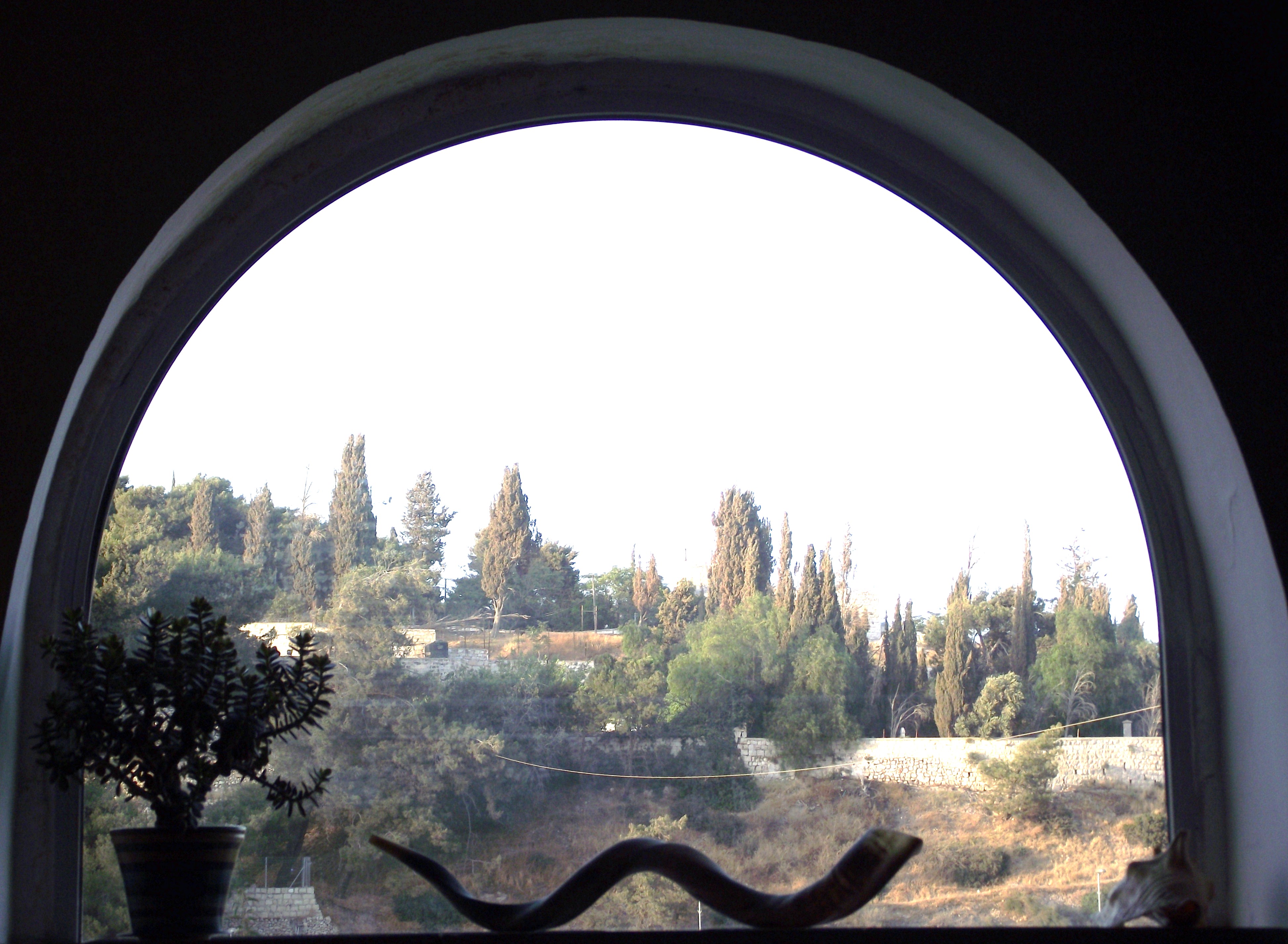
Zion from Succat Hallel Where the Light of the Menorrah Shines Continuously

For it stands in Scripture: “Behold, I am laying in Zion a stone, a cornerstone chosen and precious, and whoever believes in him will not be put to shame. (I Peter 2:6, English Standard Version) Peter was referring back to Isaiah 28:16, which says in The New Living Translation:

Therefore, this is what the Sovereign LORD says: “Look! I am placing a foundation stone in Jerusalem, a firm and tested stone. It is a precious cornerstone that is safe to build on. Whoever believes need never be shaken.”

The altitude in Jerusalem is 3,500 feet, so we’re up fairly high. Zion looks more like a hill than a mountain, but it is, in fact, a very large piece of solid, unshakeable rock.

Social Transformation in the West Bank

  • June 25, 2010 7:20 pm

On the flight here, I read C. Peter Wagner’s book Dominion! How Kingdom Action Can Change the World, and Art is reading it now. Thebook is about how the gospel brings about social transformation, but author admits that one of the problems is that there are so few examples of social transformation to point to. But we saw a real “transformer” this week, though he wouldn’t call himself that.

On Tuesday we visited our friend Dr. Maria Khoury in Taybeh in the West Bank. We were there in 2005 and were eager to see how the situation there has changed. Art believed from his reading that the West Bank, unlike Gaza, has become more stable, more secure, and better-governed, and that life in the West Bank should be improving. We were disappointed when Hassan, the taxi driver who drove us from the Qalandiya checkpoint to Taybeh, told us that life is worse now because of the security fence.

Taybeh is a beautiful village in the Judean Hills not far from Ramallah. One of the highlights of our time there was a short visit (complete with spicy, sweet Arab coffee) with Fr. Raed, the priest of the Latin Church of Taybeh (Roman Catholic). Besides being friendly and incredibly energetic, he is a genius at making things happen. His many projects are ambitious and as well-implemented as they are visionary. His conversation is peppered with statistics of the economic impacts and costs of projects like Beit Afram, the lovely home for the elderly that we visited with Maria. He knows exactly how many people can be employed by the new guesthouse, which is a retreat center for pilgrims, and how many visitors it will require to keep up with payroll.

The school and the medical center serve a population that is nearly one-third Muslim, and since unemployment is a foundational social problem in the West Bank, employment statistics weight right alongside educational and health outcomes in his calculations. It was very interesting to see that in his thinking, goals are piggy-backed, and he knows how all the pieces fit together.

One of the most appealing of his projects is the Olive Branch Foundation. We toured the workshop on our last visit and brought one of the peace lamps with Taybeh olive oil home. Fr. Raed has international trading partners in Europe and the U.S.. For a parish priest in a village of 1,600 people, that’s a pretty amazing network.

The West Bank has a long way to go, but if there were more like Fr. Raed, the progress would be quicker and happier.

Emek Rephaim

  • June 24, 2010 10:06 pm

 It’s a blessing that our little studio apartment is in a great Jerusalem neighborhood. Our street, Emek Rephaim, means “valley of giants,” and it’s mentioned a couple of times in the Bible. The slideshow below is a tour of Emek Rephaim. We walk this way roundtrip once or twice a day, so we’re walking an hour or two each day. It’s great–almost like our days in Slovakia. Hope it makes up for missing our workouts at the Y. It’s refreshingly practical to walk for transportation, not just for exercise. Yes, I ate that whole salad–and the bagel and cappucino that went with it.

Succat Hallel

  • June 23, 2010 9:02 pm

Mt Zion from Succat Hallal

Although we’ve visited many of the world’s beautiful cities, especially the European capitals, we always say that Jerusalem is our favorite city. It has an allure to us that no other city has (Moline, Illinois and Freetown, Sierra Leone are close), so we love to come here. Last time we visited Israel (we think it was 2005), we didn’t even come to Jerusalem, so we were excited when we were sitting in the Global Prayer Room at International House of Prayer (IHOP) in Kansas City in late February, and we realized, “We get to go to Jerusalem again.”

We’re blessed that we have contacts among Israelis, Palestinians, and Bedouins, and we were eager to see them again and to make new connections, but our main purpose in coming was to spend time at Succat Hallel. Succat Hallel (Hebrew for “tabernacle of praise”) is a 24/7 house of prayer. People have come together from many nations to pray for the peace of Jerusalem and for God’s plan for Israel and the nations.

Our experiences so far have exceeded our expectations. Three hours at Succat Hallal goes quickly. The worship is wonderful, and we’ve already learned a lot from the prophetic insights and experiences of the people who lead the watches. As our time here goes on, we’ll share some of the pieces that we’re fitting together. Our overall impression of the people here is a deep passion for intimate fellowship with God and radical commitment to obey Him and participate in His plan. We’re so thankful to be here.

The main thrust right now is the Elav Conference in Tel Aviv from July 3 -5. Young people from all over the land will come together at Hangar 11, the largest rock concert venue in Tel Aviv. Messianic Jews and Arab Christians will praise God together and witness to unbelievers. There is tremendous expectation about the things God is going to do through Elav, and it’s an enormous faith venture.

Liberty Bell Park (For Sophie and Sam)

  • June 21, 2010 9:57 pm

We walked through Liberty Bell Park Saturday on our way to Succat Hallel. It was a beautiful evening with the end of Shabbat approaching, so lots of families were enjoying the park. We decided to check out the playground to see if Sophie and Sam would approve. They’re connoiseurs.

We reminisced about taking our kids to this same park in the summer of 1983 when we lived in Jerusalem. Sure enough, the dragon statue they climbed on is still there, and we were pretty sure Sophie and Sam would be all over it. But that was nothing compared to the fountain. They would be in the water in a flash. Margaret would be chasing Sam as gracefully as she chased him down the aisle in the Catholic church a couple of weeks ago when he broke loose and was running full-speed toward the altar and the priest.

One of the things we were so impressed with in 1983 was the creativity of the playground facilities. The three-tongued monster slide–”the mefletzit” was our children’s favorite, and it’s still there in Kiryat Hayovel where we lived then. It was such a stark contrast to what we saw when we lived in Slovakia a while after the fall of communism, and we were saddened that there were no good places for children to play. Sophie and Sam would definitely not have approved of communist life.

Bus 18 to Mahane Yehuda

  • June 20, 2010 8:10 pm

We’re learning our way around. Art actually likes getting a little bit lost because he loves hauling out the map and pouring over it. I’m more like Sakajawea–”I feel like it’s over there somewhere.”

Ohad told us that bus 18 goes to Mahane Yehuda and that we can buy tickets from the driver, which is so much better than trying to figure out a vending machine in a language you can’t read. It was tough enough in the grocery store trying to figure out which bottle is shampoo and which is conditioner. Fortunately, Art’s Hebrew is good enough to read the word “shampoo.”

In 1983, when the kids were little and we lived in Jerusalem for the summer, we rode the buses all the time. Once I left my bag with our passports and apartment keys on the bus because I was trying to make sure I got off with three kids and Don’s umbrella stroller. The rule was that any unattended bag was dangerous and was taken to the dessert and blown up. I panicked, but Margaret, who was eleven, remembered seeing a police station near the bus stop. By then the bag had been evacuated from the bus and turned in. By the time we reached the police station, we looked so pathetic that the officer agreed to open the bag and look at the passports that proved we were the guilty ones.

It’s wonderful to just live here and not feel the obligation to rush around seeing the sights. We’ve already seen them. Now we’re just interested in enjoying the place and the people. So, our purpose wasn’t really to get to Mahane Yehuda, but to find King of Kings, the church we want to attend on Sunday. We did it!

Please watch the slideshow, and you can enjoy Mahane Yehuda without all the sweating. Shalom.